WorkWord Quake
Word Quake
My first prototype had three-minute matches, and players gave up halfway. I shortened the round and designed more ways to compete.
- Project
- Word Quake · Mobile game
- Role
- Lead Product Designer
- Time
- 6 weeks
- Worked with
- The founder and one game developer
- Match duration
- 180 → 60 sec
- Compete in real time
- 2 players
- Earned power-ups
- 3 types
01
In brief
Word Quake is a word game where two people play against each other in real time. You spell words on a shared grid, you can see your opponent’s tiles, and the match is over in 60 seconds.
The founder wanted a word game with the pace of a competitive mobile game. I designed the match, the ranking and the way players challenge each other.
The final direction brought shorter matches, open tiles and earned power-ups into a single game loop. I worked with the founder and developer to connect the design to the playable experience.
02
Where it started
The brief was a competitive word battle game. Something with the thinking of Scrabble and the speed of a mobile esport, that anyone could pick up but that still rewarded skill.
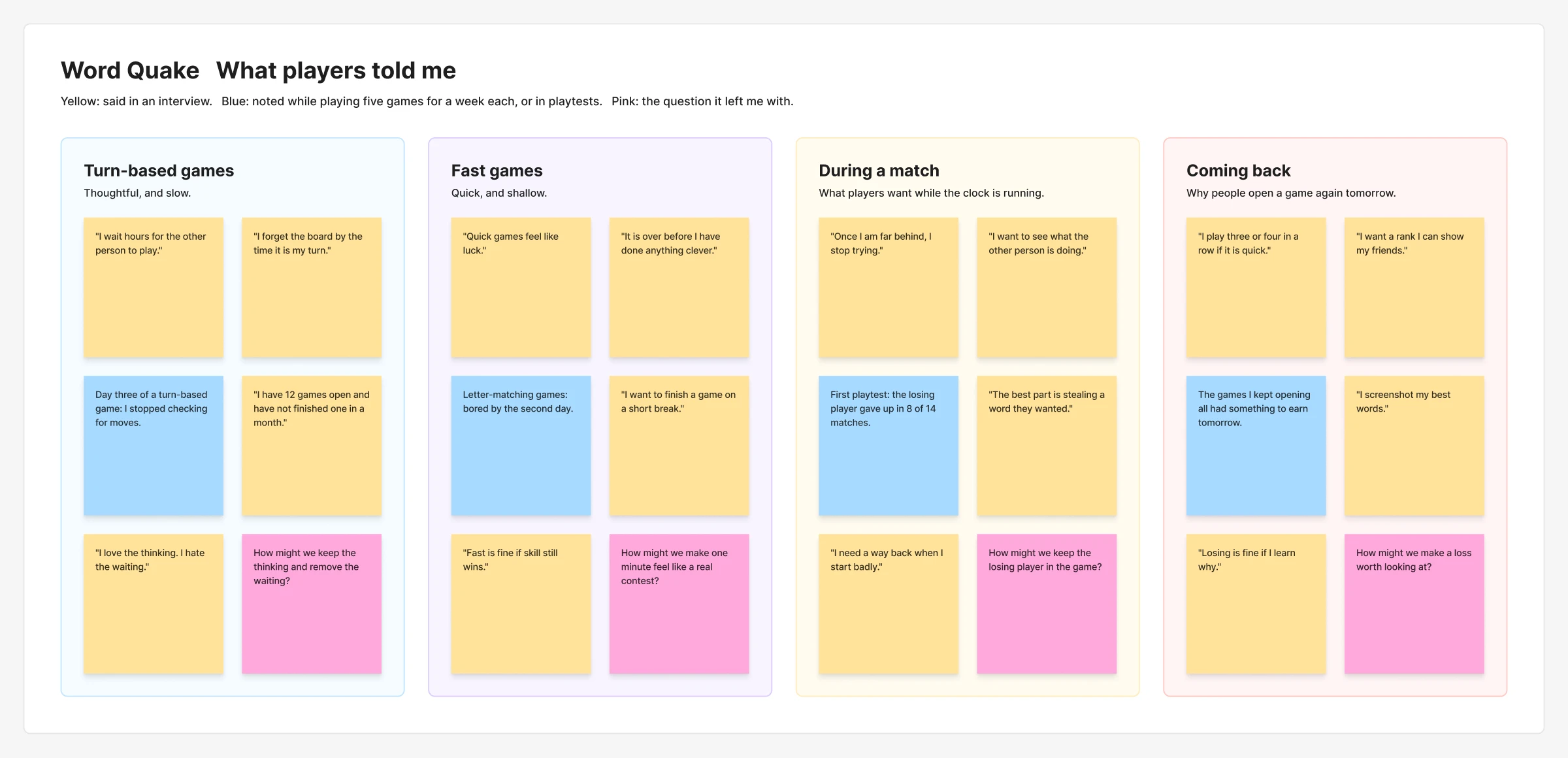
The games already out there sat at two ends. Turn-based games were thoughtful but slow, and you could wait hours for a move. Quick letter-matching games offered shorter sessions, but I wanted more room for decisions between opponents.
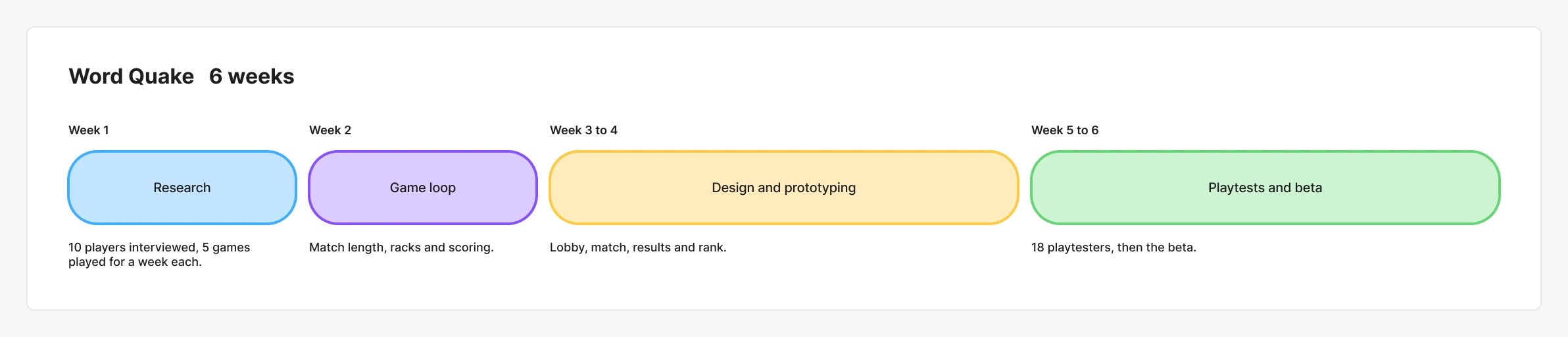
I led the research, game flows and interface design, working with the founder and one game developer. We had six weeks to shape a playable experience around short matches, clear feedback and a reason to play again.
03
Research
Ten players and five games
I interviewed 10 people: six word game fans and four competitive mobile players. I also reviewed five popular games, looking at their pacing, waiting time and what encouraged me to start another round.
The two groups wanted the same thing from different sides. Word players wanted more tension. Competitive players wanted something they could finish on a short break. Neither group wanted to wait for someone else’s turn.
Who I designed for
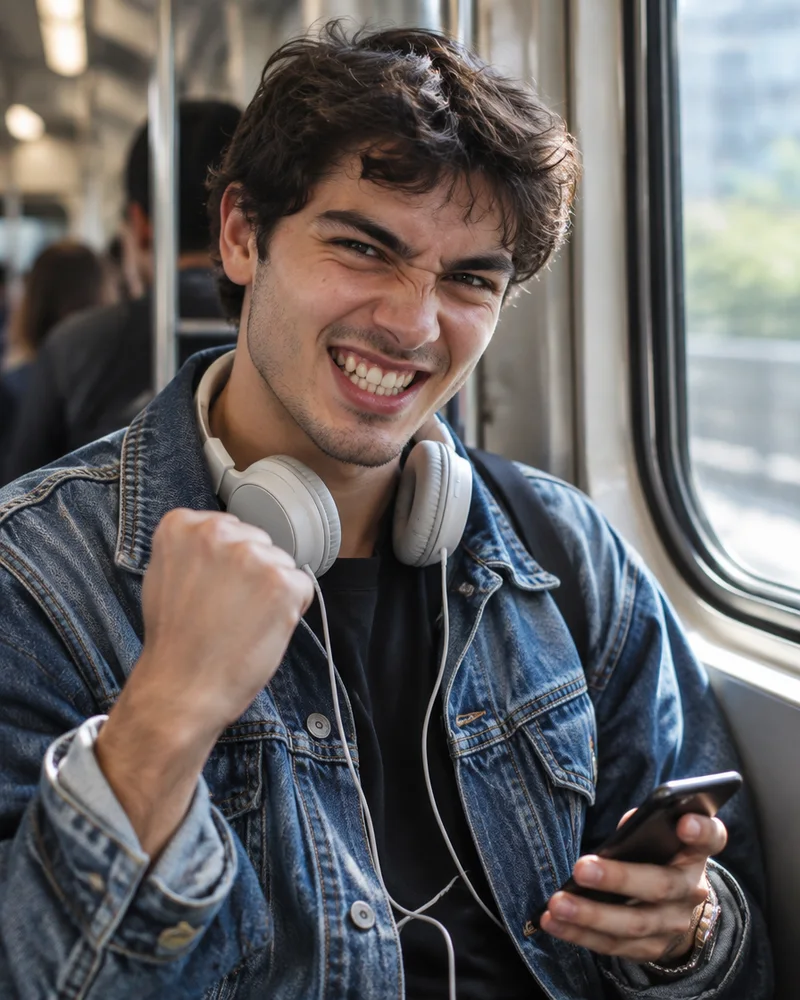
Sam is good at word games and he likes people to know it. He has 12 turn-based games open with friends and has not finished one in a month.
Wants
- To beat a real person, today
- To fit a full game between two train stops
- To have a rank he can show his friends
What gets in the way
- Waits hours for the other person to play
- Forgets the board by the time it is his turn
- Quick games feel like luck
What they do today
- Opens a game, sees it is not his turn, closes it
- Plays three or four short games in a row when he finds one he likes
- Screenshots his best words
And the other kind of player
Priya is the word game fan. She has a 400-day streak in a daily puzzle and plays turn-based games with her sister. She likes to think, and she is wary of anything with a timer.
Wants
- To feel clever, not rushed
- To play a real person and get an answer today
- To see why she lost a game
What gets in the way
- Her sister takes two days to play a turn
- Fast games reward tapping, not vocabulary
- A bad start usually means a lost game
What they do today
- Plays in the evening, in one sitting
- Looks up the words she missed afterwards
- Drops a game the first time it feels unfair
Three design decisions behind Word Quake
04
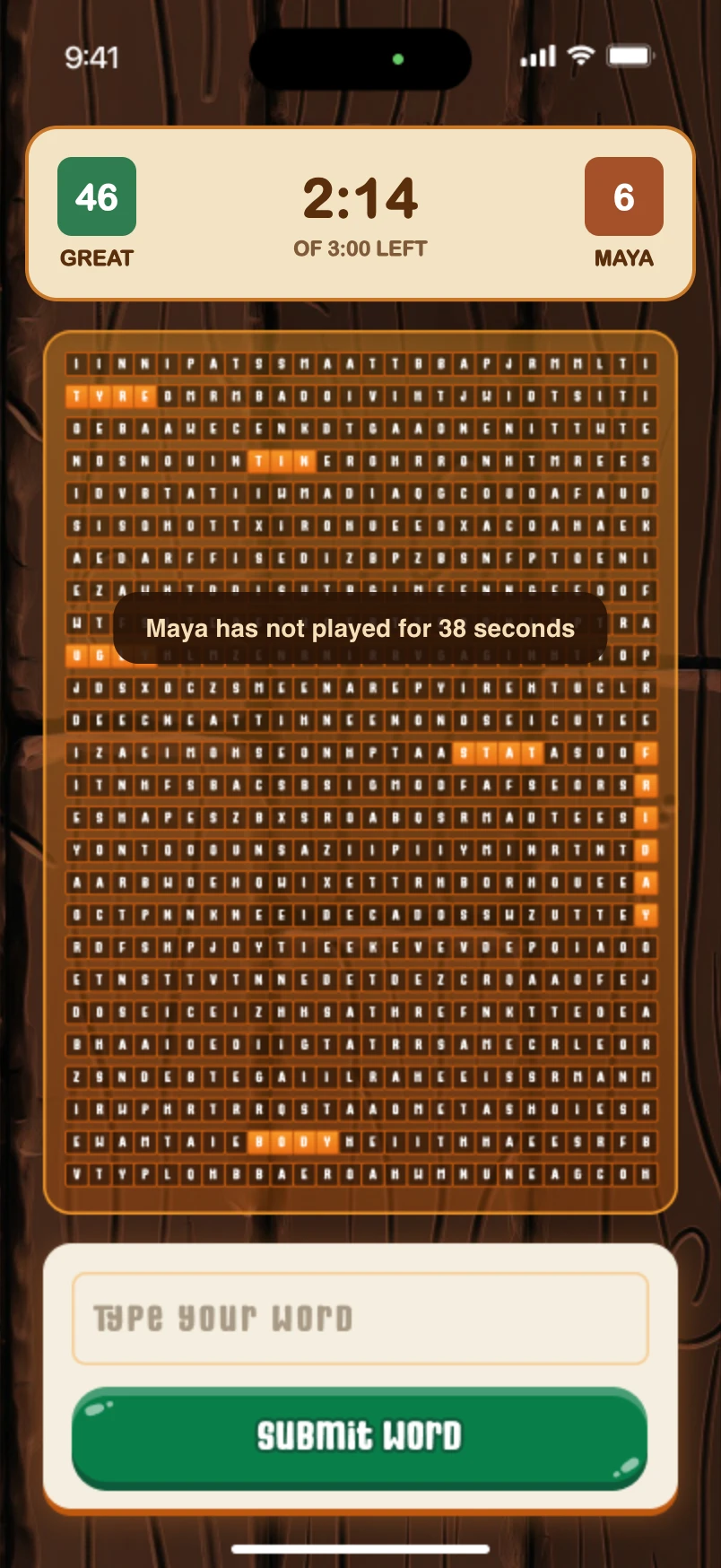
1. I started with three-minute matches. Players gave up halfway.
My first prototype had three-minute matches. It felt generous, and it gave people time to find good words.
In the first playtest, the losing player stopped trying before the end in 8 of 14 matches. A large early lead left the trailing player with a long wait and little confidence they could recover.
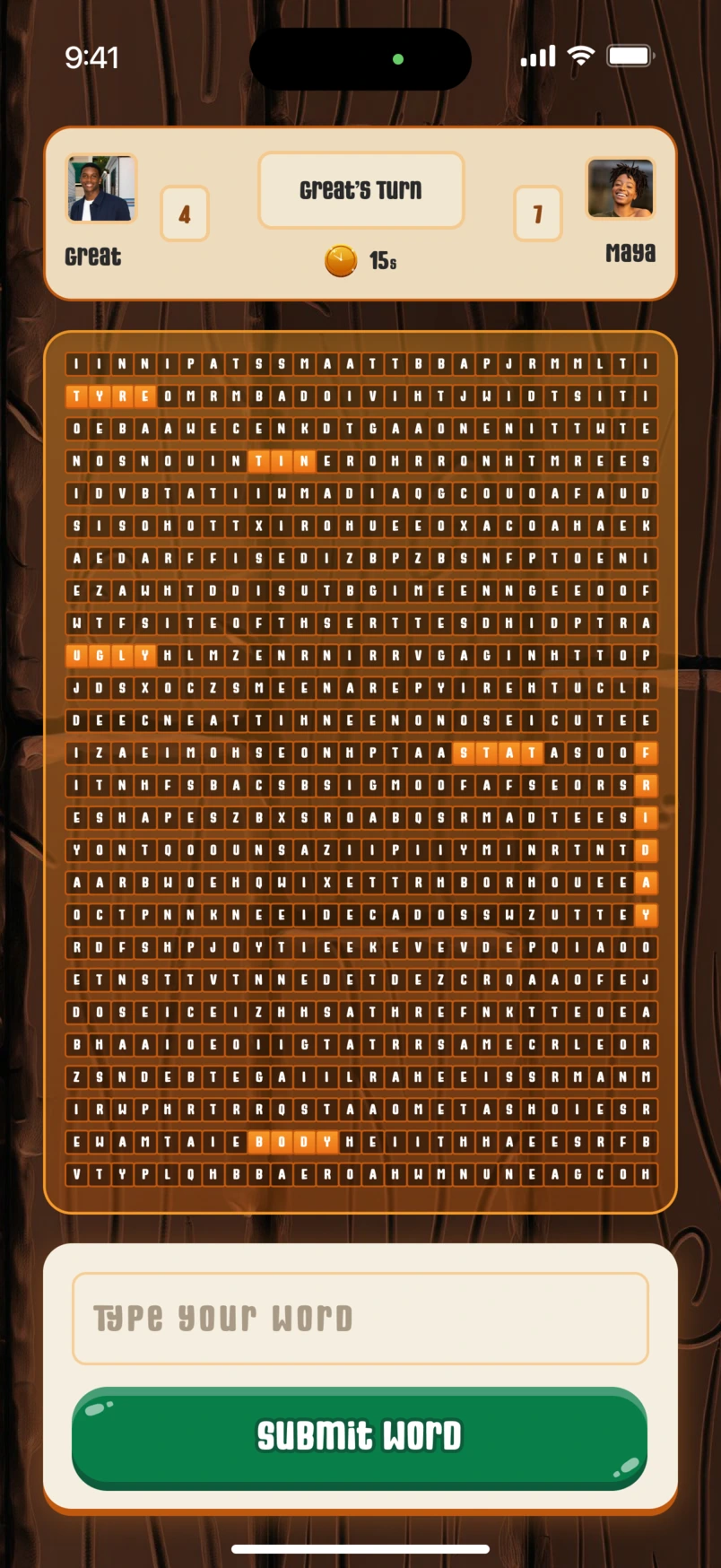
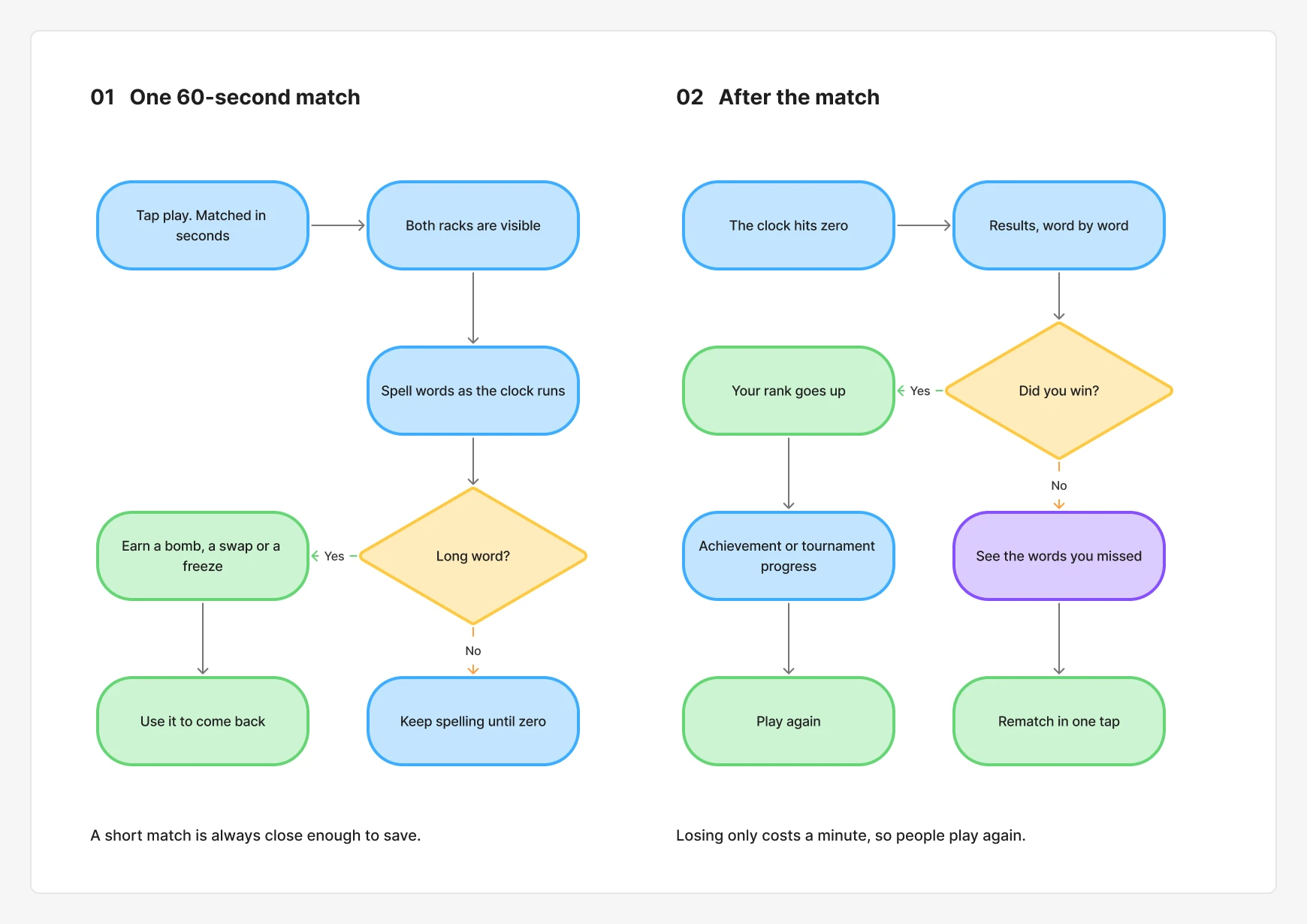
I cut the match to 60 seconds. This reduced the time spent in a match that already felt decided and made starting another round a smaller commitment.
I gave up the careful play that some word game fans love. Players who normally think about every word had to go on instinct. That trade-off made testing with both groups especially important.
First version
Revised design
05
2. I showed players their opponent's tiles. Not everyone liked it.
In most word games your letters are private. I made both racks visible.
My reasoning was that hidden letters make a real-time game feel like luck. If you can see what your opponent is holding, you can block them, bait them and guess what they are about to spell.
This was the most divisive thing I designed. 12 of the 18 playtesters preferred it. The other six did not, and some of them said so strongly.
I kept it. The players who liked it really liked it, because it added a mind game on top of the word game. That supported the competitive direction of the game, though the split meant I still needed to test how new players learned to use the open tiles.
06
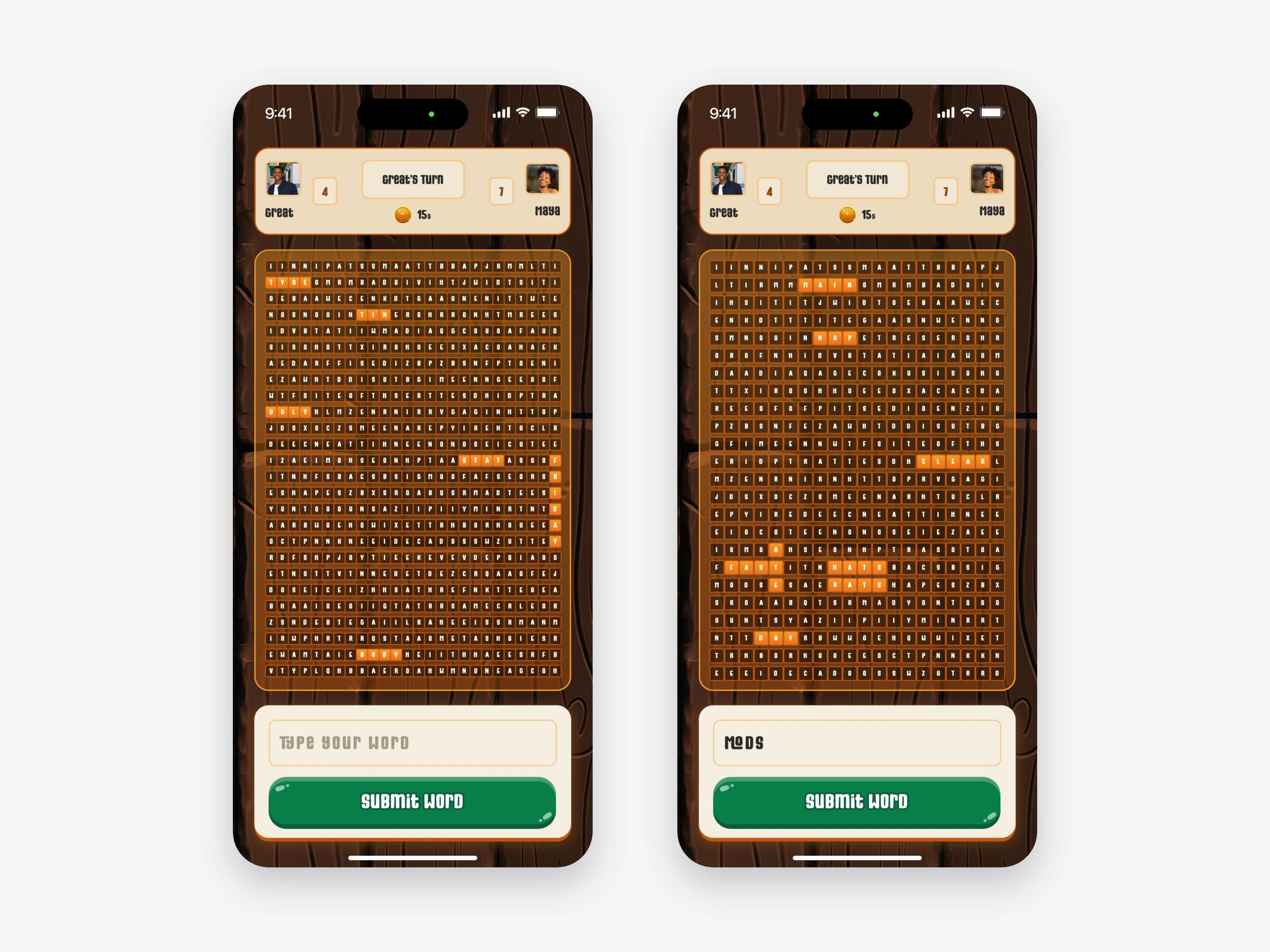
3. I added power-ups so the losing player could come back
Shorter matches reduced the wait, but they did not solve every uneven game. Even at one minute, a player who falls behind early needs a reason to keep going.
I tied power-ups to longer words: tile bombs, letter swaps and freezes. Either player can earn them. The intention was to create more ways to change the course of a match while keeping vocabulary part of the challenge.
This adds another layer of strategy and another balancing problem. A stronger speller can now lose to a well-timed freeze. But in the playtests, those comebacks were what players talked about afterwards.
07
What I designed
Lobby, match, results, rank
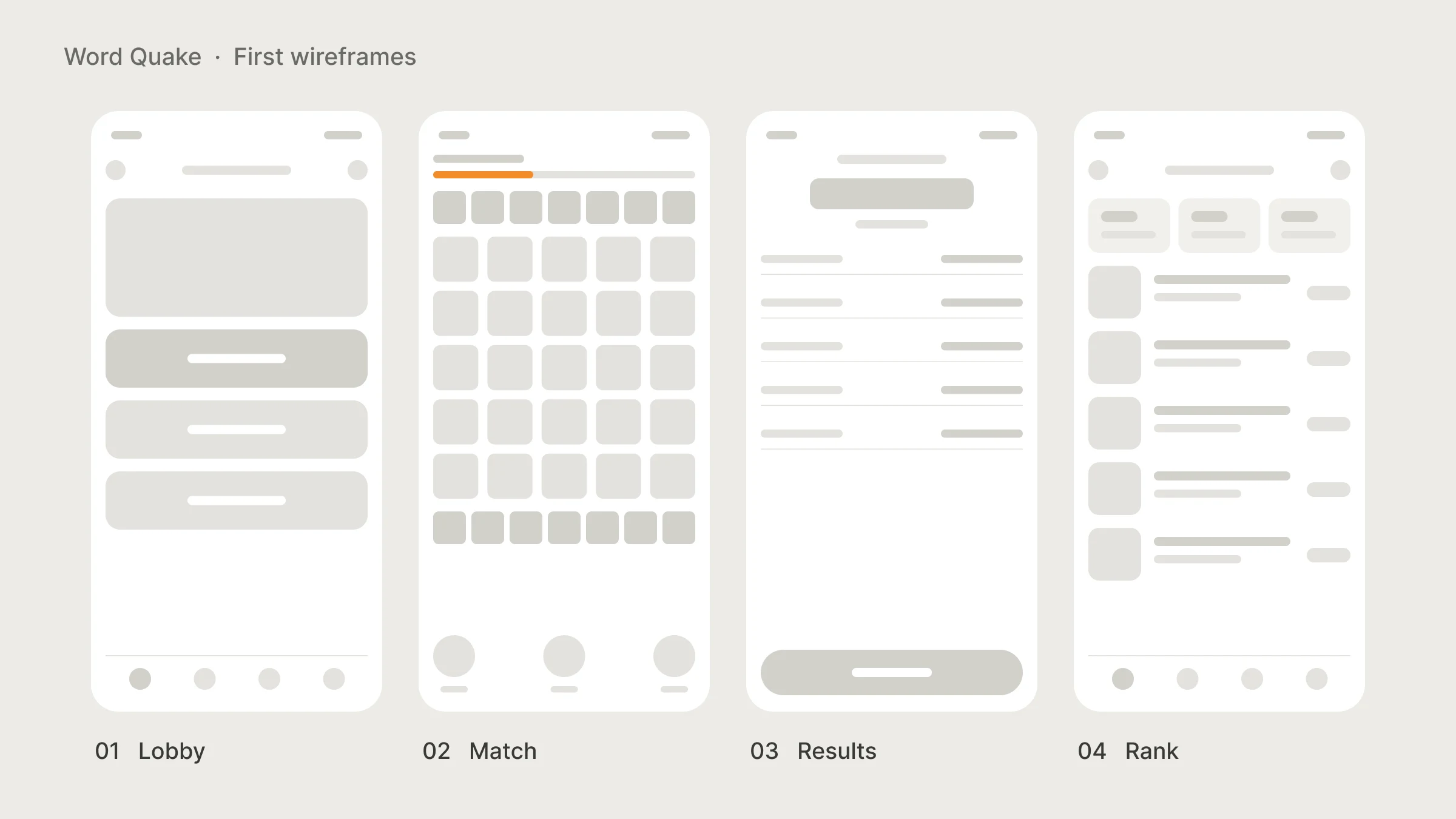
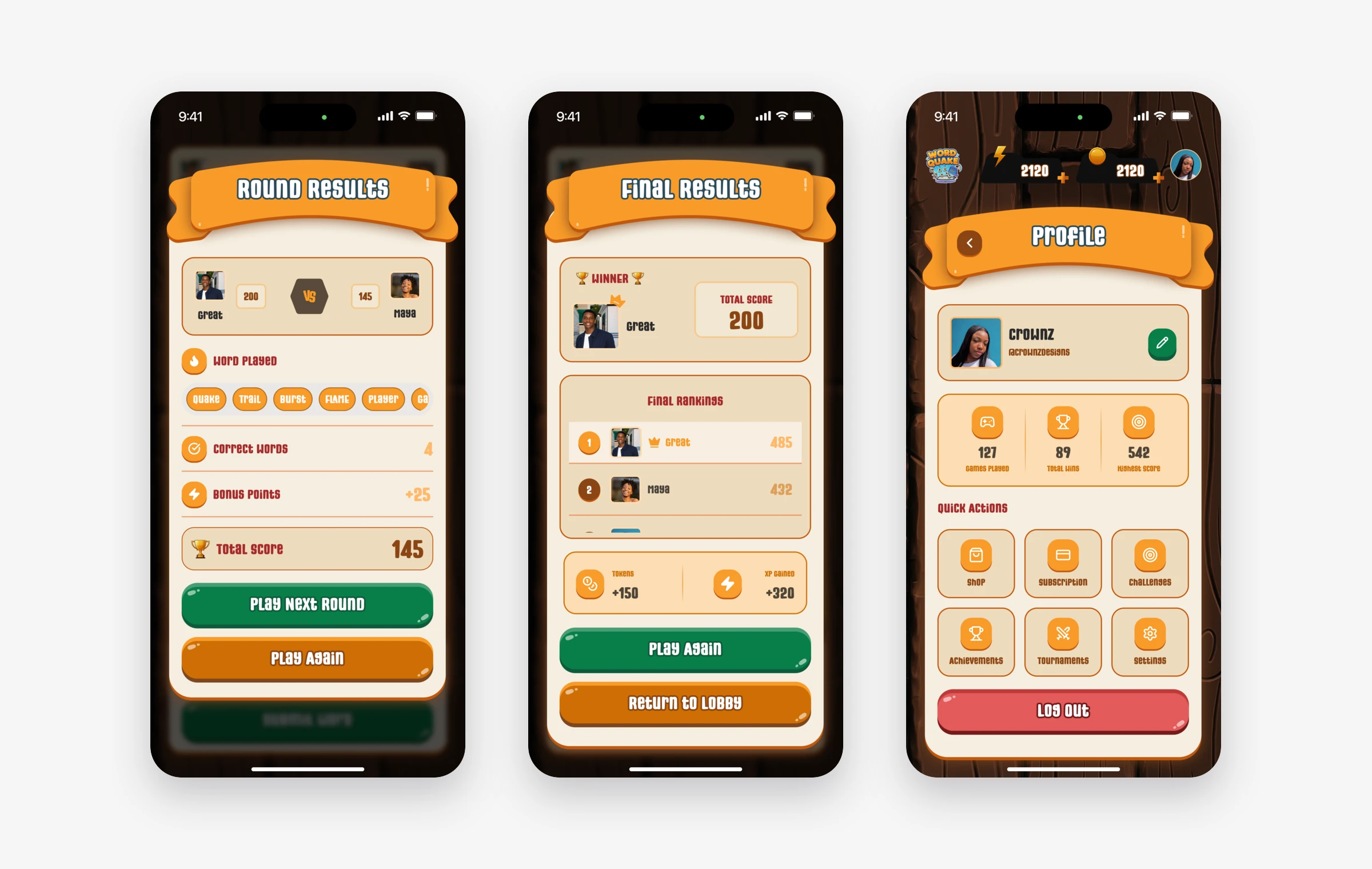
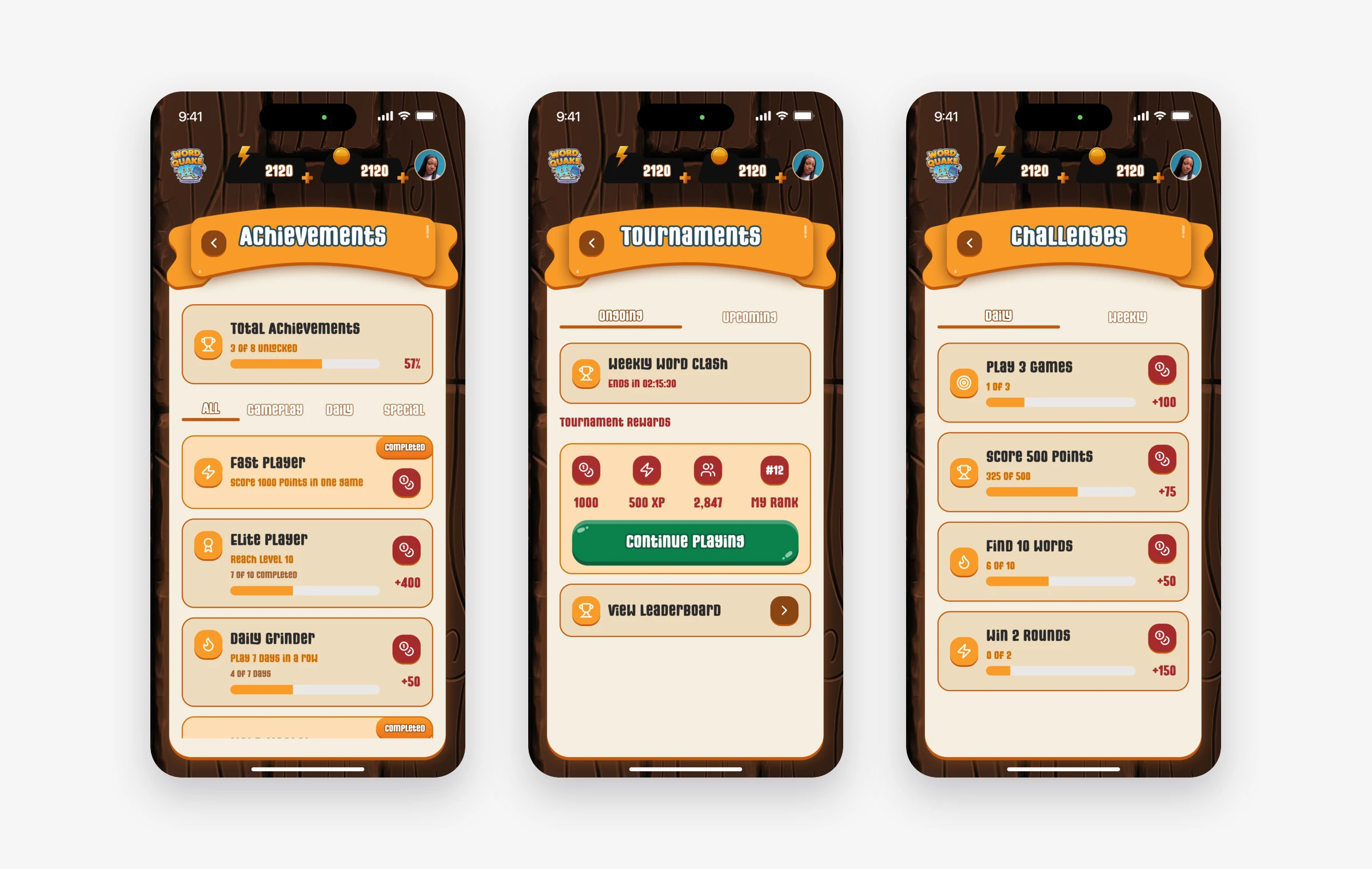
The look is loud on purpose: carved wood, orange banners and chunky type. It should feel like a game before the first tile is placed. Seasonal rank resets give players a fresh opportunity to progress.
08
What changed
A shorter round with more decisions
I reduced the match duration from 180 to 60 seconds. Two players compete in real time, with three types of earned power-up: tile bombs, letter swaps and freezes. My contribution was connecting those mechanics to clear feedback, from entering a match to reviewing the result. The shorter round reduces the time commitment; whether it encourages repeat play is a separate question.
I worked with the founder on the product direction and with the developer on the playable experience. The interface gives players feedback, but responsive real-time play and balanced game rules are just as important to whether a match feels fair.
Finishing a short match does not tell us whether someone will return the next day. Matchmaking, opponent skill and the reliability of the game all influence that decision, alongside the design.
I would look at match completion, repeat sessions and longer-term return together. That would help distinguish a game that is easy to try from one people choose to keep playing.
“She brought the product to life with minimal supervision and showed great initiative throughout. Her designs were beautiful, thoughtful, and fully addressed all UX concerns on the project.”
09
Looking back
The biggest lesson from Word Quake is how much the length of a match decides everything else. Changing the timer changed how long players stayed engaged, even with the same grid and tiles.
I also learnt that I do not have to remove everything people disagree about. The open tiles split the room, and I am glad I left them in.
If I did it again, I would test the open tiles earlier and with more players. It was the riskiest decision in the game, and I made it with 18 people.
Next project · Social discovery